
Building an effective anti-aging skincare routine does not have to feel overwhelming. The right combination of proven ingredients, applied in the correct order, can visibly reduce fine lines, boost firmness, and restore a youthful glow. Whether you are just noticing the first signs of ageing or looking to refine an existing regimen, this guide walks you through every step. From cleansing and antioxidant serums to retinol and sunscreen, you will learn exactly what to use, when to use it, and why each product matters for long-term results.
Why Start an Anti-Aging Routine Now?
Collagen production begins declining in your mid-20s, and environmental stressors such as UV exposure and pollution accelerate the process. A proactive approach that combines prevention and correction delivers the best outcomes. As the skincare experts at Beauty Affairs note, a combination of prevention and correction is the right way to approach ageing gracefully.
Prolonged sun exposure is a major cause of premature ageing, leading to wrinkles, age spots, and loss of elasticity. That is why sun protection should anchor every anti-aging strategy. Starting early means fewer corrective measures later.
Key Anti-Aging Ingredients to Know
Retinol
Retinol is a Vitamin A derivative that belongs to the retinoid family of skincare ingredients. It is one of the most well-researched compounds for anti-ageing. Retinol boosts the amount of collagen your body makes and plumps out skin, reducing fine lines and wrinkles. Explore the full range of retinol skincare at Beauty Affairs to find the right strength for your skin.
Vitamin C
Vitamin C is a potent antioxidant that shields skin from wrinkle-causing free radicals while also stimulating collagen production. It doubles as a depigmenting agent, helping to fade dark spots caused by sun damage or post-acne marks. Browse Vitamin C serums and moisturisers for options suited to every skin type.
Peptides
Peptides are short-chain amino acids that act as the building blocks of protein. They signal skin cells to produce more collagen, hold onto moisture, and even deliver a subtle muscle-relaxing effect that softens expression lines. Discover peptide-powered skincare to add this powerhouse to your routine.
Your Morning Anti-Aging Routine
Step 1: Gentle Cleanser. Start with a mild, hydrating cleanser that removes overnight buildup without stripping moisture. Look for formulas enriched with ceramides or oat extract to protect the skin barrier.
Step 2: Vitamin C Serum. Apply a Vitamin C serum to clean, dry skin. Vitamin C creates the perfect environment for collagen creation, stabilising existing collagen while stimulating the production of new fibres. A formula like the Dermalogica Biolumin-C Serum pairs Vitamin C with peptides for amplified firming benefits.
Step 3: Hydrating Moisturiser. Lock in actives with a moisturiser containing hyaluronic acid or ceramides. Hyaluronic acid is a compound found naturally in the body that is primarily responsible for skin hydration and health.
Step 4: Broad-Spectrum SPF 30+. Sunscreen is non-negotiable. Using a broad-spectrum sunscreen with at least SPF 30 every single day prevents UV-induced collagen breakdown, making it the single most important anti-aging step you can take.
Your Evening Anti-Aging Routine
Step 1: Double Cleanse. Use an oil-based cleanser first to dissolve sunscreen and makeup, followed by a water-based cleanser for a thorough yet gentle clean.
Step 2: Retinol Serum. Apply your retinol product to dry skin. Retinoids can become more irritating when mixed with water, so always pat your face dry before application. If you are new to retinol, start with once per week and increase gradually. Learn more in our guide to introducing retinol.
Step 3: Peptide-Rich Moisturiser. Seal everything in with a nourishing night cream. Peptide-infused formulas support overnight collagen repair, and ceramides help rebuild the moisture barrier while you sleep.
Anti-Aging Ingredient Comparison Table
| Ingredient | Primary Benefit | Best Time to Apply | Results Timeline |
|---|---|---|---|
| Retinol | Boosts collagen, reduces wrinkles | Evening only | 8-12 weeks |
| Vitamin C | Antioxidant protection, brightening | Morning | 4-8 weeks |
| Peptides | Signals collagen production, firms | Morning or evening | 6-12 weeks |
| Hyaluronic Acid | Deep hydration, plumping | Morning and evening | Immediate to 2 weeks |
| Niacinamide (B3) | Barrier repair, fades pigmentation | Morning or evening | 4-8 weeks |
| SPF 30+ | UV protection, prevents photoageing | Morning (reapply) | Preventative / ongoing |
Common Mistakes to Avoid
Skipping Sunscreen While Using Retinol
Retinol increases sensitivity to the sun. If you use retinol without sunscreen, you risk causing more photodamage while trying to repair existing signs, essentially going in circles with no real results.
Introducing Too Many Actives at Once
Layering multiple new active ingredients simultaneously makes it difficult to identify irritation triggers. Introduce one active at a time, allowing two to four weeks of adjustment before adding the next.
Neglecting Hydration
Anti-aging actives can leave skin feeling dry. Amping up hydration with a hyaluronic acid serum or a ceramide moisturiser prevents flakiness and supports the skin barrier during the adjustment period.
Key Takeaways
- Sun protection with SPF 30+ is the single most impactful anti-aging step you can take.
- Retinol is the gold standard for reducing fine lines; always apply to dry skin at night.
- Vitamin C offers antioxidant defence in the morning and boosts collagen production.
- Peptides complement retinol by signalling skin to produce more collagen and retain moisture.
- Hyaluronic acid keeps skin plump and hydrated, supporting the effectiveness of other actives.
- Introduce active ingredients one at a time to minimise irritation and track results.
- Consistency over 8 to 12 weeks is essential before judging whether a product works.
Frequently Asked Questions
What age should I start an anti-aging skincare routine?
Most dermatologists recommend starting a basic anti-aging routine in your mid-20s, when collagen production begins to slow. At minimum, use sunscreen daily and add an antioxidant serum. You can introduce retinol from your late 20s onward.
Can I use retinol and Vitamin C together?
Yes, though many experts suggest using them at different times of day. Apply Vitamin C in the morning for antioxidant protection and retinol at night for collagen stimulation. This approach minimises the risk of irritation while maximising benefits.
How long does it take to see results from retinol?
Most people notice visible improvements in skin texture and fine lines within 8 to 12 weeks of consistent use. Initial skin purging, a temporary increase in breakouts as dead cells shed faster, can occur during the first few weeks.
Is hyaluronic acid good for anti-aging?
Absolutely. Hyaluronic acid keeps skin hydrated and plump, which reduces the appearance of fine lines. Research shows that hyaluronic acid levels in the upper layers of the skin are a reliable predictor of the skin's visual age.
What is the correct order to apply skincare products?
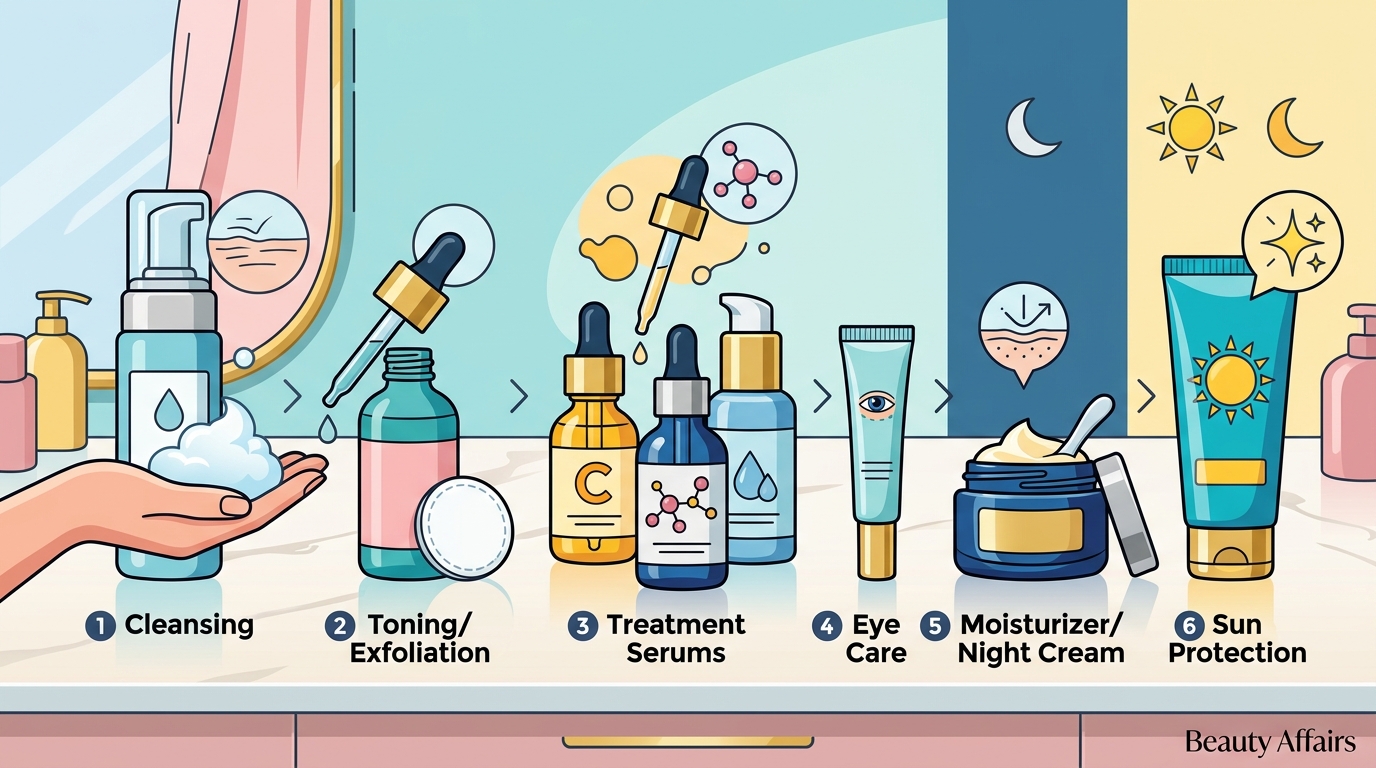
Apply products from thinnest to thickest consistency: cleanser, toner, serum (Vitamin C or retinol), eye cream, moisturiser, then sunscreen in the morning. This layering order ensures each product absorbs effectively.
Do peptides really work for wrinkles?
Yes. Peptides signal skin cells to produce more collagen and can even relax facial muscles to soften expression lines. They work best as part of a routine that also includes retinol and sunscreen for comprehensive anti-aging support.
How often should I exfoliate in an anti-aging routine?
One to two times per week with a gentle AHA or BHA exfoliant is sufficient. Over-exfoliating damages the moisture barrier and increases sensitivity, particularly when you are also using retinol.
Get Started Today
Ready to build your personalised anti-aging skincare routine? Explore the curated collection of anti-aging serums and mature skin solutions at Beauty Affairs. Take the Beauty Affairs skin quiz for a recommendation tailored to your unique skin type and goals, and enjoy free shipping on orders over $179.