
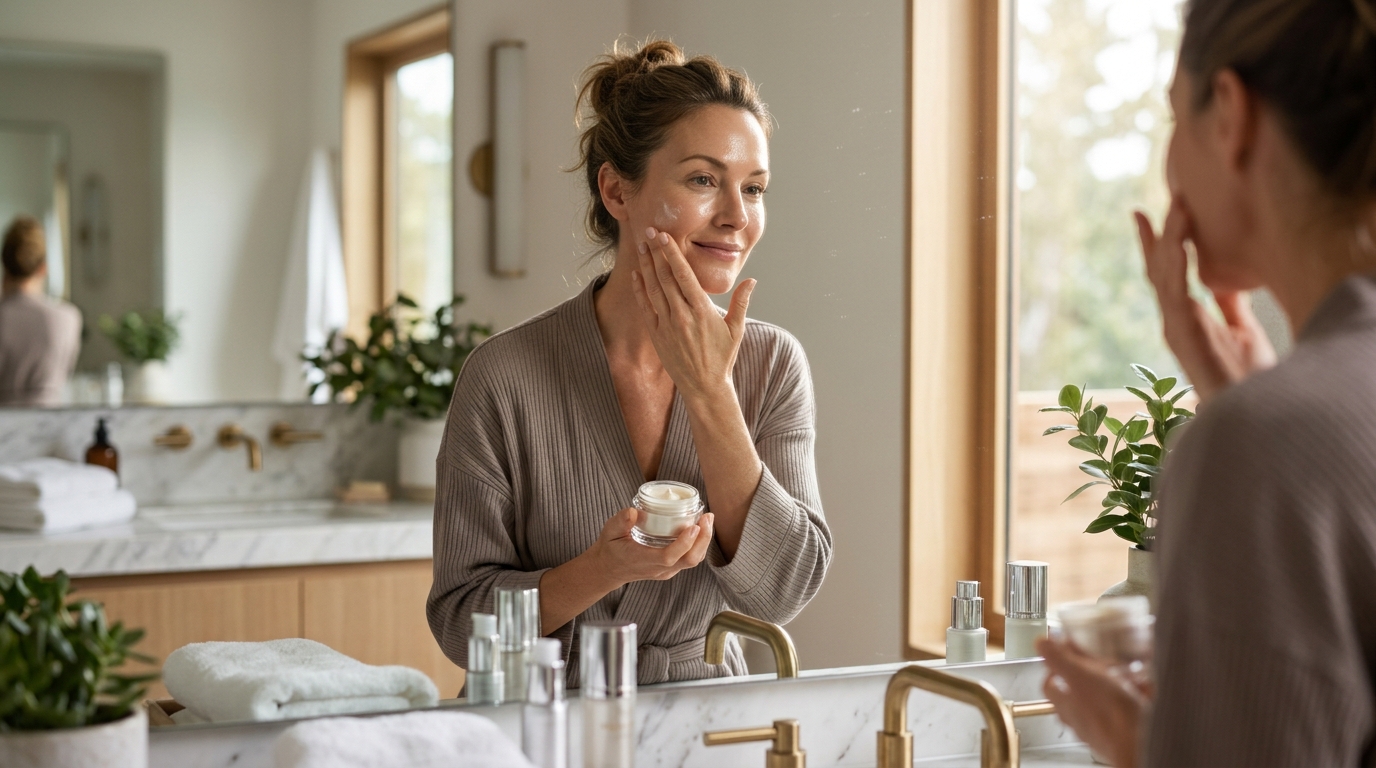
Building an effective anti-aging skincare routine does not have to be overwhelming. Whether you are noticing your first fine lines or looking to maintain a youthful complexion well into your 50s and beyond, the right combination of products and ingredients can make a visible difference. Research published in npj Aging confirms that collagen production decreases by approximately 1 to 1.5% per year in human skin, making a proactive routine essential. In this guide, we walk you through each step, highlight the most effective ingredients, and help you build a routine tailored to your skin.
Why Your Skin Needs an Anti-Aging Routine
Intrinsic aging is the natural decline in skin function driven by genetics and time. Starting in your mid-twenties, your body produces less collagen each year. According to research published in The American Journal of Pathology, reduced synthesis of collagen types I and III is characteristic of chronologically aged skin.
Extrinsic aging is premature skin damage caused by external factors such as UV exposure, pollution, and smoking. UV radiation is responsible for up to 80% of visible facial aging according to dermatology research. The good news? A consistent routine combining prevention and correction can slow these processes significantly.
Step-by-Step Anti-Aging Routine
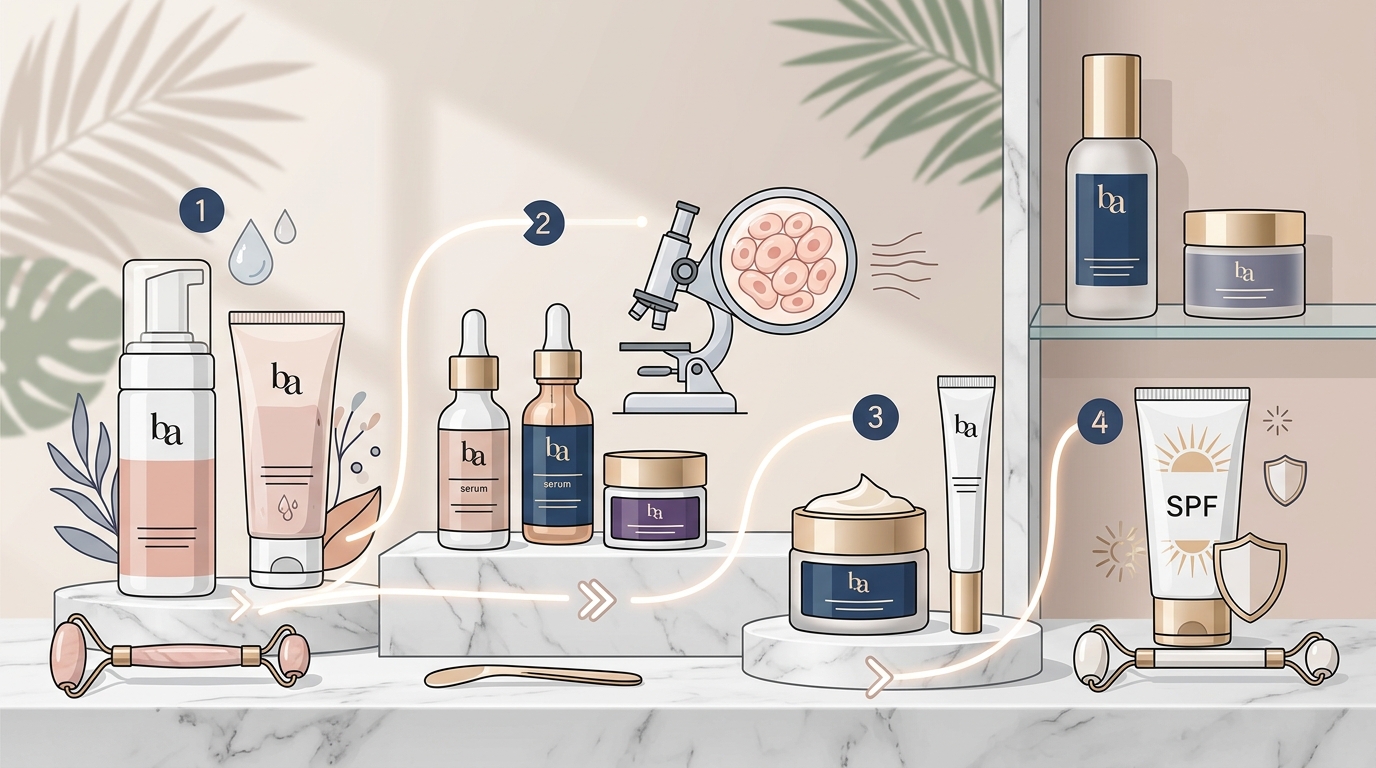
Step 1: Cleanse
Every effective routine starts with a clean canvas. A gentle cleanser removes excess sebum, pollution particles, and makeup residue without stripping your skin's moisture barrier. As part of your beginner skincare routine, cleansing morning and night is non-negotiable.
Step 2: Apply an Antioxidant Serum
An antioxidant serum is a concentrated treatment designed to neutralise free radicals before they damage collagen and elastin. Vitamin C is particularly effective because it tackles photodamage, fades hyperpigmentation, and stimulates collagen production. Browse the full range of anti-aging serums at Beauty Affairs to find one suited to your skin type.
Step 3: Moisturise and Protect with SPF
Finish your morning routine with a moisturiser and broad-spectrum sunscreen of at least SPF 30. A day cream with SPF combines hydration and sun protection in one step. SPF 50 blocks close to 98% of UV rays, making it ideal for Australia's high UV environment.
Key Anti-Aging Ingredients to Look For
Retinol is a vitamin A derivative widely regarded as one of the most researched anti-aging ingredients available. It accelerates cell turnover, smooths fine lines, and evens skin tone. If you are new to retinol, follow these tips for introducing retinol to avoid irritation.
Peptides are short-chain amino acids that signal skin cells to produce more collagen, hold onto moisture, and even relax facial muscles for a smoothing effect. Explore peptide skincare at Beauty Affairs to add them to your routine.
Niacinamide is a form of vitamin B3 that reinforces the skin barrier, fades hyperpigmentation, and reduces the appearance of wrinkles. It pairs well with virtually every other active ingredient, making it a versatile addition to any routine.
Morning vs. Night: How to Split Your Routine
Your morning routine should focus on protection. Use a gentle cleanser, an antioxidant serum (such as vitamin C), a hydrating moisturiser, and sunscreen. Daytime is not the time for potent actives like retinol, which can increase sun sensitivity.
Your nighttime routine should focus on repair. After cleansing, apply your retinol or peptide serum, followed by a richer night cream that supports the skin's natural renewal cycle. Nighttime is a critical period for skin regeneration, making it ideal for results-driven treatments.
Anti-Aging Ingredient Comparison
| Ingredient | Primary Benefit | Best Used | Pairs Well With |
|---|---|---|---|
| Retinol | Cell turnover, wrinkle reduction | PM only | Peptides, hyaluronic acid |
| Vitamin C | Antioxidant protection, brightening | AM | Vitamin E, ferulic acid |
| Peptides | Collagen stimulation, firming | AM or PM | Niacinamide, retinol |
| Niacinamide | Barrier repair, tone evening | AM or PM | Almost everything |
| Hyaluronic Acid | Deep hydration | AM and PM | Ceramides, peptides |
| SPF 30-50 | UV damage prevention | AM (reapply every 2 hrs) | Antioxidants |
Lifestyle Tips That Support Anti-Aging
Skincare products are only one part of the equation. A balanced diet rich in antioxidants, adequate hydration, regular exercise, and quality sleep all contribute to healthier skin from within. Avoiding smoking and limiting alcohol intake help prevent premature collagen breakdown.
In Australia's Southern Hemisphere, increased UV radiation from a weakened ozone layer makes daily sunscreen use even more critical. Wearing protective clothing and seeking shade during peak UV hours further protects your skin investment. Explore the full luxury sunscreen collection to find your ideal formula.
Key Takeaways
- Collagen declines roughly 1 to 1.5% per year from your mid-twenties, making early prevention worthwhile.
- A basic anti-aging routine has three pillars: cleanse, treat with actives, and protect with SPF.
- Retinol is the gold-standard anti-aging ingredient but must be introduced gradually.
- Vitamin C and other antioxidants defend against UV-induced free radical damage during the day.
- Peptides boost collagen production and pair well with most other active ingredients.
- Sunscreen (SPF 30 or higher) is the single most impactful step for preventing premature aging.
- Lifestyle factors like diet, hydration, and sleep meaningfully influence how your skin ages.
Frequently Asked Questions
What age should I start an anti-aging skincare routine?
Dermatologists recommend starting preventive measures such as daily SPF and antioxidant use in your mid-twenties, when collagen production begins its gradual decline.
Can I use retinol and vitamin C together?
Yes, but it is best to use them at different times. Apply vitamin C in the morning for antioxidant protection and retinol at night for cell renewal. This avoids potential irritation from layering two potent actives.
How long does it take to see results from an anti-aging routine?
Most people notice visible improvements within 8 to 12 weeks of consistent use. Skin cell turnover takes approximately 28 days, so patience and consistency are key.
Is sunscreen really the most important anti-aging product?
Yes. UV exposure is responsible for up to 80% of visible facial aging. Daily broad-spectrum sunscreen use is considered the most effective single step for preventing premature wrinkles, dark spots, and loss of elasticity.
What is the correct order for applying anti-aging products?
Apply products from thinnest to thickest consistency: cleanser, toner or essence, serum (vitamin C or retinol), eye cream, moisturiser, then sunscreen (morning only).
Are expensive products always better for anti-aging?
Not necessarily. Efficacy depends on formulation, ingredient concentration, and how well a product suits your skin type. That said, luxury formulations from brands like La Prairie, SK-II, and Estee Lauder often feature higher concentrations of clinically proven actives.
Can I do anti-aging treatments at a medispa instead?
Professional treatments complement a home routine beautifully. Beauty Affairs offers medispa treatments across Sydney that use non-invasive therapy equipment combined with luxury skincare for enhanced results.
Start Your Anti-Aging Routine Today
Ready to build the perfect routine for your skin? Take the Beauty Affairs skin quiz to discover personalised product recommendations, or explore the full anti-aging skincare collection. With free shipping on orders over $179 and Afterpay available, there has never been a better time to invest in your skin's future.