
Anti-Aging Skincare Routine: Your Step-by-Step Guide to Youthful Skin
Building an effective anti-aging skincare routine does not have to be complicated. Whether you are noticing your first fine lines or looking to address deeper wrinkles and loss of firmness, the right combination of active ingredients and consistent daily steps can make a visible difference. After the age of 20, collagen production in the skin drops by roughly 1% each year, gradually leading to thinner, less resilient skin. The good news? A targeted routine built around proven ingredients like retinol, vitamin C, and peptides can slow these changes and help your skin look its best at every age. Here is exactly how to build yours.
Why Start an Anti-Aging Routine Now
Collagen is the structural protein responsible for keeping skin firm, plump, and elastic. According to research published in Scientific American, a person produces about 1% less collagen in the skin each year after age 20. By your 40s and 50s, this cumulative decline becomes visible as wrinkles, sagging, and uneven texture.
The right anti-aging skincare can both prevent and correct premature signs of aging. Prevention is always easier than correction, which is why dermatologists recommend starting a basic anti-aging routine in your mid-20s. Even if you are starting later, the right ingredients can still deliver meaningful improvements to skin texture and firmness.
Your Step-by-Step Anti-Aging Routine
An anti-aging skincare routine is a daily regimen of targeted products applied in a specific order to maximise absorption and efficacy. Follow these steps for the best results.
Step 1: Gentle Cleanser
Start with a gentle cleanser that removes impurities without stripping your skin's natural moisture barrier. A product like the ASAP Daily Facial Cleanser purifies without over-drying, making it ideal for daily use in an anti-aging routine.
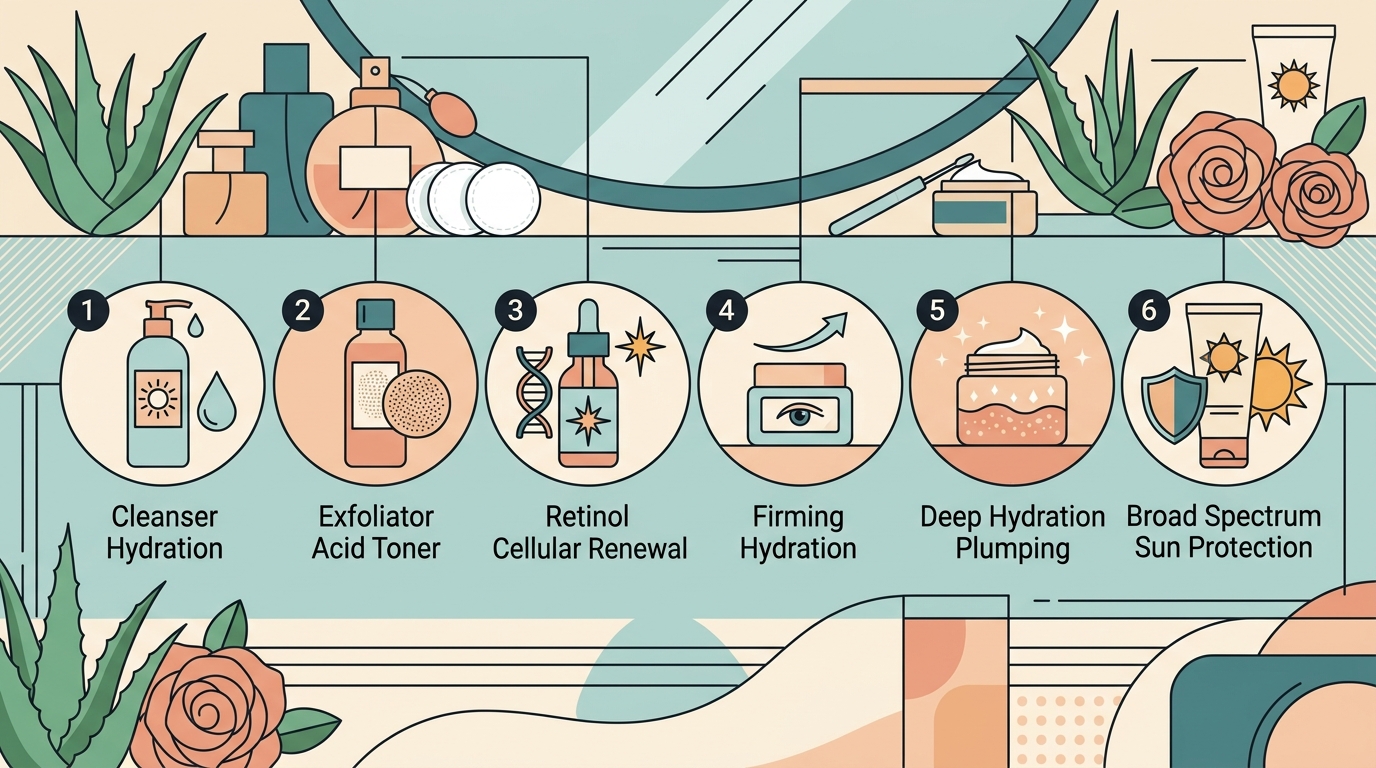
Step 2: Antioxidant Serum (AM) or Retinol Serum (PM)
In the morning, apply a vitamin C serum to shield skin from environmental stressors and boost collagen production. At night, switch to a retinol serum to accelerate cell turnover and smooth fine lines. Retinol is a vitamin A derivative that speeds up the skin's natural renewal cycle and stimulates collagen synthesis from within.
Step 3: Moisturiser and SPF
Follow your serum with a hydrating moisturiser to lock in active ingredients. In the morning, always finish with a broad-spectrum sunscreen of at least SPF 30. Prolonged UV exposure is a major cause of premature aging, leading to wrinkles, age spots, and loss of elasticity.
Key Anti-Aging Ingredients Explained
When choosing products for your anti-aging routine, ingredients matter more than branding. Here are the proven actives to look for.
Retinol is the gold standard of anti-aging skincare. It encourages cellular turnover and collagen production, and it is among the most researched skincare ingredients available. If you are new to retinol, begin with a lower concentration and build up gradually. Beauty Affairs offers a detailed guide on introducing retinol to your routine to help you get started safely.
Vitamin C is a potent antioxidant that protects the skin from free radicals caused by pollution and UV light. It also boosts collagen production and helps fade dark spots and hyperpigmentation for a more even, radiant complexion.
Peptides are short-chain amino acids that signal skin cells to produce more collagen, reduce melanin production, and retain moisture. Peptide-based skincare pairs exceptionally well with retinol for a comprehensive anti-aging approach. Some peptides can even have a mild muscle-relaxing effect, helping to soften expression lines.
Morning vs. Night Routine Differences
Your morning and evening routines serve different purposes. The AM routine focuses on protection, while the PM routine centres on repair and renewal.
In the morning, layer a vitamin C serum under moisturiser and sunscreen. Vitamin C works synergistically with SPF to strengthen your defence against UV-induced aging. At night, apply your retinol serum after cleansing. Nighttime is a critical period for skin renewal, making it the ideal window to harness the benefits of active treatments.
If you use AHAs or glycolic acid for exfoliation, alternate them with retinol rather than layering both on the same evening. Learn more about safe ingredient combinations in the Beauty Affairs guide on how to use retinol with other actives.
Common Anti-Aging Routine Mistakes
Even the best products will underperform if used incorrectly. Here are the pitfalls to avoid.
Skipping sunscreen: UV damage is the single largest contributor to premature skin aging. No serum or cream can compensate for unprotected sun exposure.
Overloading actives too quickly: Introducing retinol, vitamin C, and exfoliating acids all at once can overwhelm your moisture barrier, causing redness and peeling. Add one new active at a time and allow two to four weeks of adjustment.
Neglecting hydration: Anti-aging actives like retinol can be drying. Pair them with hydrating ingredients such as hyaluronic acid and ceramides to keep your barrier strong and your skin comfortable.
Anti-Aging Ingredients Comparison Table
| Ingredient | Primary Benefit | Best Used | Ideal For |
|---|---|---|---|
| Retinol | Cell turnover and collagen stimulation | PM only | Fine lines, wrinkles, uneven texture |
| Vitamin C | Antioxidant protection and brightening | AM | Dullness, dark spots, sun damage |
| Peptides | Collagen signalling and firming | AM or PM | Loss of firmness, expression lines |
| Hyaluronic Acid | Deep hydration and plumping | AM and PM | Dehydration, fine lines |
| Niacinamide (Vitamin B3) | Barrier repair and tone evening | AM and PM | Redness, enlarged pores, pigmentation |
| Ceramides | Moisture barrier reinforcement | AM and PM | Dry, sensitive, or retinol-adjusted skin |
Key Takeaways
- Collagen production declines by approximately 1% per year from your 20s, making early prevention worthwhile.
- Retinol, vitamin C, and peptides are the three cornerstone actives in any anti-aging skincare routine.
- Always wear broad-spectrum SPF 30 or higher during the day; UV exposure is the leading cause of premature skin aging.
- Introduce new actives one at a time and allow your skin two to four weeks to adjust before adding another.
- Apply antioxidant serums in the morning for protection and retinol at night for repair.
- Hydrating ingredients like hyaluronic acid and ceramides support your moisture barrier while using potent actives.
- Consistency matters more than price; use your products regularly for at least 8 to 12 weeks before judging results.
Frequently Asked Questions
What age should I start an anti-aging skincare routine?
Most dermatologists recommend starting a basic routine with antioxidants and sunscreen in your mid-20s. This is when collagen production naturally begins to slow. However, it is never too late to start; active ingredients like retinol and vitamin C can still improve skin at any age.
Can I use retinol and vitamin C together?
Yes, but it is generally best to use vitamin C in the morning and retinol at night. This avoids potential irritation from layering two potent actives simultaneously and lets each ingredient work optimally at the right time of day.
How long does retinol take to show results?
Retinol typically requires 8 to 12 weeks of consistent use before visible improvements appear. The ingredient works by accelerating cell turnover from deep within the skin, so patience is essential.
What is the most important step in an anti-aging routine?
Sunscreen. Daily broad-spectrum SPF protection prevents the UV damage responsible for up to 80% of visible facial aging. No treatment product can undo the effects of unprotected sun exposure.
Are peptides necessary in an anti-aging routine?
Peptides are not strictly necessary, but they are highly beneficial. They signal skin cells to boost collagen production, improve firmness, and can even help soften expression lines. They also pair well with virtually every other active ingredient.
Should I change my routine for mature skin?
Mature skin has unique needs beyond standard anti-aging. It often struggles with moisture retention, volume loss, and thinning. Consider adding richer moisturisers, targeted mature skin products, and collagen-supporting supplements to your regimen.
How do I know which products are right for my skin type?
The best approach is to match product textures and active concentrations to your skin type. If you have oily skin, choose lightweight serums over heavy creams. For personalised guidance, explore the anti-aging collection at Beauty Affairs where products are curated by skin concern.
Start Building Your Anti-Aging Routine Today
Ready to put these steps into practice? Browse the full range of luxury skincare products at Beauty Affairs and find the perfect retinol, vitamin C, and peptide formulas for your skin. Enjoy free shipping on orders over $179 and Afterpay on every purchase.