

Recent dermatological surveys indicate that approximately 78 percent of consumers experience adverse reactions when mismatching product formulations with their baseline hydration levels. This mismatch frequently triggers inflammatory responses, compromised barrier function, and accelerated visible aging. Understanding your specific classification system remains the foundational step toward achieving consistent radiance and long-term tissue resilience.
Identify Your Core Skin Classification
Determining your baseline classification requires observing how your epidermis responds to standard cleansing routines and environmental exposure. Normal skin is a balanced dermal state characterized by minimal breakouts, fine pores, and consistent hydration retention. Dry skin types typically exhibit tightness, flaking, and reduced sebum production, requiring heavier occlusive barriers. Oily skin presents with enlarged follicular openings, persistent shine, and higher susceptibility to comedonal blockages. Combination skin distributes these traits unevenly, usually concentrating excess oil in the central facial zone while maintaining dryness along the periphery. Mature skin undergoes progressive collagen degradation, resulting in reduced elasticity, pronounced fine lines, and slower cellular turnover rates.
Tracking these visual and tactile markers over a fourteen-day observation period provides reliable diagnostic data. You should avoid harsh stripping agents that disrupt your natural lipid matrix. Instead, prioritize gentle surfactants that preserve your acid mantle integrity.
Match Active Ingredients to Concerns
Ingredient selection must directly address your identified classification without triggering secondary irritation. Salicylic acid is a beta-hydroxy compound that penetrates lipid-rich follicles to dissolve sebum buildup and prevent inflammatory acne formation. Hyaluronic acid functions as a humectant that binds water molecules to the stratum corneum, delivering immediate plumping effects. According to clinical efficacy data, niacinamide applications regulate sebaceous gland activity while simultaneously reinforcing intercellular lipid barriers. Retinol derivatives accelerate cellular turnover, reducing the appearance of hyperpigmentation and smoothing textural irregularities over consistent application cycles.
Always introduce one active compound at a time to monitor tissue tolerance. Patch testing remains the standard protocol for preventing widespread allergic contact dermatitis. Consult our Clinique Natural Beauty & Skin Care collection for clinically tested formulations designed for sensitive and reactive dermal profiles.
Select Appropriate Product Formulations
Product texture dictates absorption efficiency and long-term wear performance across different facial zones. Gel-based serums provide lightweight hydration without clogging follicular openings, making them ideal for congested or acne-prone classifications. Rich emollient creams create protective occlusive layers that prevent transepidermal water loss during overnight recovery cycles. Lightweight lotions offer balanced moisture distribution for daily urban environments with moderate humidity levels. Oil-based cleansers effectively dissolve stubborn waterproof pigments and environmental pollutants without stripping essential phospholipids.
Review the complete skincare catalog to compare concentration ratios and delivery mechanisms. Matching formulation viscosity to your seasonal climate changes prevents unnecessary product waste and maximizes active compound penetration.
Integrate Clinical Skincare Tools
Modern cosmetic routines increasingly incorporate targeted technological devices to enhance topical absorption and stimulate microcirculation. LED light therapy is a targeted technological intervention that utilizes specific wavelength frequencies to reduce inflammatory markers and accelerate tissue repair protocols. Microcurrent devices deliver low-voltage electrical impulses that temporarily tone facial musculature and improve lymphatic drainage patterns. Automated cleansing brushes provide consistent mechanical exfoliation to remove dead keratinocytes and prepare the stratum corneum for serum absorption.
Clinical device studies demonstrate that LED light therapy utilizes specific wavelength frequencies to reduce inflammatory markers and accelerate tissue repair protocols. Explore our dedicated skincare tools section to find clinically validated devices that complement your existing regimen. Consistent device usage requires strict adherence to manufacturer frequency guidelines to prevent barrier compromise.
Leverage Professional Medispa Guidance
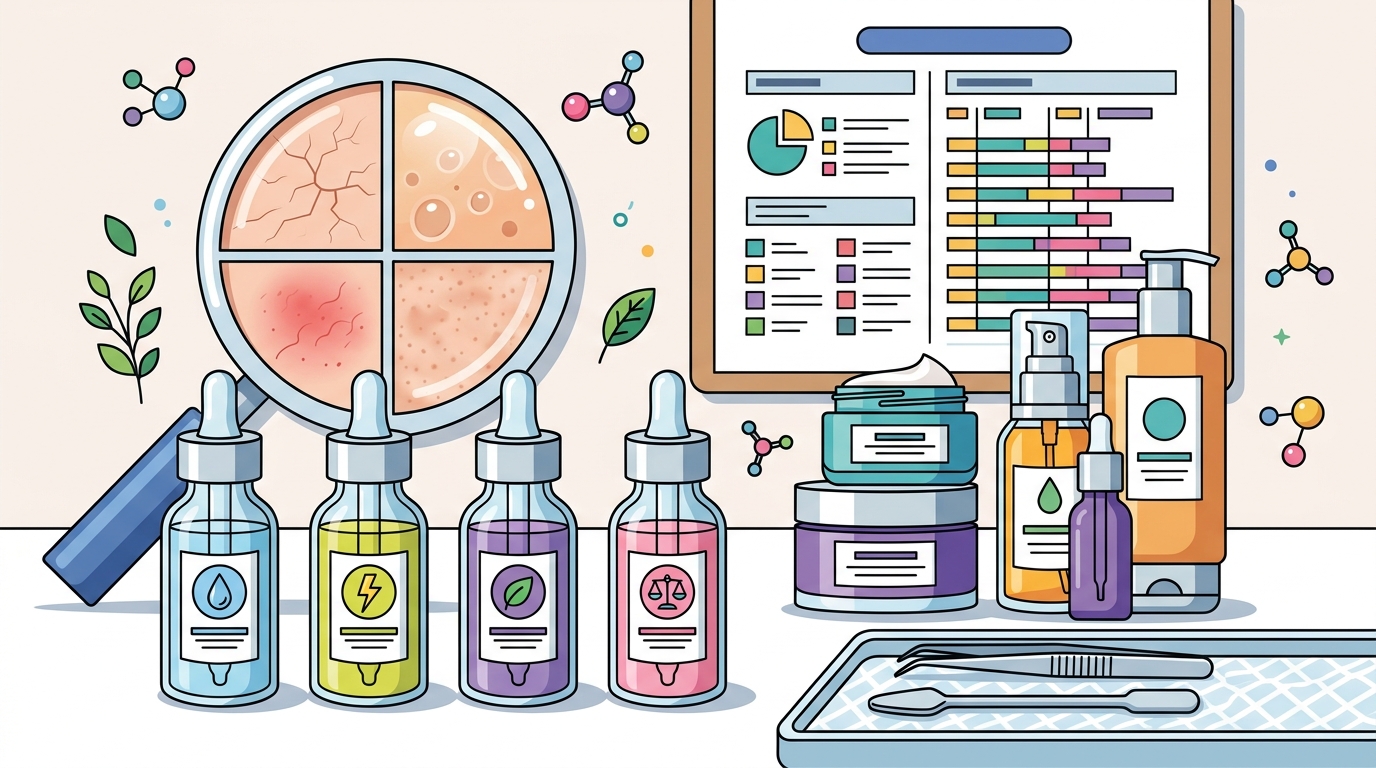
Self-diagnosis often misses underlying hormonal fluctuations, genetic predispositions, and environmental damage accumulation. Professional skin consultation is a structured diagnostic process that utilizes magnification lighting and specialized imaging to map precise tissue vulnerabilities. Licensed aestheticians can recommend customized treatment pathways that combine in-office procedures with at-home maintenance protocols. Targeted interventions like pigmentation reduction, rosacea management, and anti-aging protocols require precise parameter calibration to avoid adverse tissue reactions.
Industry compliance metrics reveal that professional skin consultations utilize magnification lighting and specialized diagnostic imaging to map precise tissue vulnerabilities. Schedule a comprehensive assessment through our medispa services page to receive a personalized formulation roadmap. Expert guidance ensures you invest only in products that deliver measurable clinical outcomes.
Cosmetic Selection Matrix by Classification
| Skin Classification | Recommended Formulation Type | Key Active Ingredients | Primary Concern Targets |
|---|---|---|---|
| Normal | Balanced lotions and lightweight serums | Antioxidants, ceramides, hyaluronic acid | Preventative maintenance, environmental protection |
| Dry | Rich emollient creams and occlusive oils | Squalane, shea butter, glycerin, bio-peptides | Barrier reinforcement, deep hydration retention |
| Oily | Water-based gels and non-comedogenic serums | Salicylic acid, niacinamide, clay extracts | Sebum regulation, pore refinement, breakage prevention |
| Combination | Zone-specific layering with lightweight moisturizers | Bio-ferments, lightweight peptides, zinc oxide | Central oil control, peripheral hydration balancing |
| Mature | Dense restorative creams and concentrated ampoules | Retinol derivatives, collagen boosters, CoQ10 | Collagen synthesis stimulation, wrinkle reduction, elasticity restoration |
Key Takeaways
- Approximately 78 percent of consumers experience adverse reactions when mismatching product formulations with baseline hydration levels.
- Normal skin maintains balanced sebum production, minimal breakouts, and consistent hydration retention across all facial zones.
- Salicylic acid penetrates lipid-rich follicles to dissolve sebum buildup and prevent inflammatory acne formation.
- LED light therapy utilizes specific wavelength frequencies to reduce inflammatory markers and accelerate tissue repair protocols.
- Professional skin consultations utilize magnification lighting and specialized diagnostic imaging to map precise tissue vulnerabilities.
- Matching formulation viscosity to seasonal climate changes prevents unnecessary product waste and maximizes active compound penetration.
- Consistent device usage requires strict adherence to manufacturer frequency guidelines to prevent barrier compromise.
Frequently Asked Questions
How do I determine if my skin is oily or combination?
Perform a bare-faced observation test after gentle cleansing. Press a single blotting paper across your forehead, nose, and chin. If the paper absorbs significant oil from the central zone but remains dry along the cheeks, your classification is combination. Oily skin will show uniform saturation across all tested areas.
Can I use anti-aging products if I have active breakouts?
Yes, but you must prioritize non-comedogenic formulations that do not clog follicular openings. Focus on lightweight serums containing niacinamide or gentle retinol derivatives instead of heavy occlusive creams. Always introduce one active compound at a time to monitor tissue tolerance.
What is the safest way to introduce chemical exfoliants?
Start with a low concentration formula applied once weekly during your evening routine. Gradually increase frequency to two or three times per week only if your stratum corneum shows no signs of redness or excessive peeling. Always follow with broad-spectrum sun protection to prevent UV sensitivity.
How often should I replace my skincare products?
Most active formulations maintain peak efficacy for three to six months after initial opening. Oxidation degrades vitamin C and certain peptide complexes, reducing their therapeutic value. Store all opaque containers in cool, dry environments away from direct sunlight exposure.
Do professional medispa treatments replace daily home routines?
No, clinical procedures enhance results but require consistent at-home maintenance to preserve long-term outcomes. Scheduled treatments like pigmentation reduction or HIFU lifting stimulate deep tissue remodeling. Daily cleansing, targeted serums, and sun protection maintain those structural improvements.
Begin Your Personalized Cosmetic Journey
Matching your biological profile to the correct cosmetic formulations eliminates guesswork and accelerates visible tissue improvements. Our Sydney CBD and Brookvale locations provide comprehensive skin consultations, advanced HIFU treatments, and curated luxury product collections. Visit our main homepage to browse our complete inventory of premium skincare, makeup, and body care essentials. Book your personalized assessment today and receive a tailored product roadmap designed for your unique dermatological requirements.