

Understanding your skin type is the foundational step in building an effective beauty routine. According to the American Academy of Dermatology, approximately 64% of people have combination skin, making it the most common skin type, while dry and oily skin types affect significant portions of the population. Choosing the wrong cosmetics can lead to breakouts, premature aging, and wasted money. This guide breaks down exactly how to identify your skin type and select the best products from our curated collections at Beauty Affairs.
Step 1: Identify Your Skin Type
Before diving into specific products, you must determine your baseline skin type. Skin type is the inherent characteristic of your skin that determines how it reacts to environmental factors and products. The most common types are oily, dry, combination, sensitive, and normal.
To identify your type, perform the bare-faced test. Wash your face with a gentle cleanser and pat dry. Wait one hour without applying any products. Observe your skin in natural light. If your entire face feels tight and looks flaky, you likely have dry skin. If you see shine across your forehead, nose, and chin (the T-zone), you have oily skin. If the T-zone is shiny but your cheeks are dry or normal, you have combination skin. If your skin feels comfortable and balanced, it is likely normal. If it turns red or itchy, it is sensitive.
Cosmetics for Oily Skin
Oily skin is characterized by an overproduction of sebum, leading to a shiny appearance and enlarged pores. People with this skin type are prone to acne and blackheads. The goal is to control shine without stripping the skin, which can trigger even more oil production.
Key Ingredients to Look For
When shopping for cosmetics for oily skin, look for non-comedogenic formulas. These are specifically designed not to clog pores. Ingredients like salicylic acid and niacinamide are excellent for regulating oil production. At Beauty Affairs, you can explore our makeup collection for lightweight foundations and mattifying primers that keep shine at bay throughout the day.
Product Recommendations
Opt for powder-based products over liquid creams where possible. Powder foundations and setting powders help absorb excess oil. For skincare, consider our skincare range which includes oil-free moisturizers and gel-based cleansers. Avoid heavy, occlusive creams that trap heat and sweat against the skin.
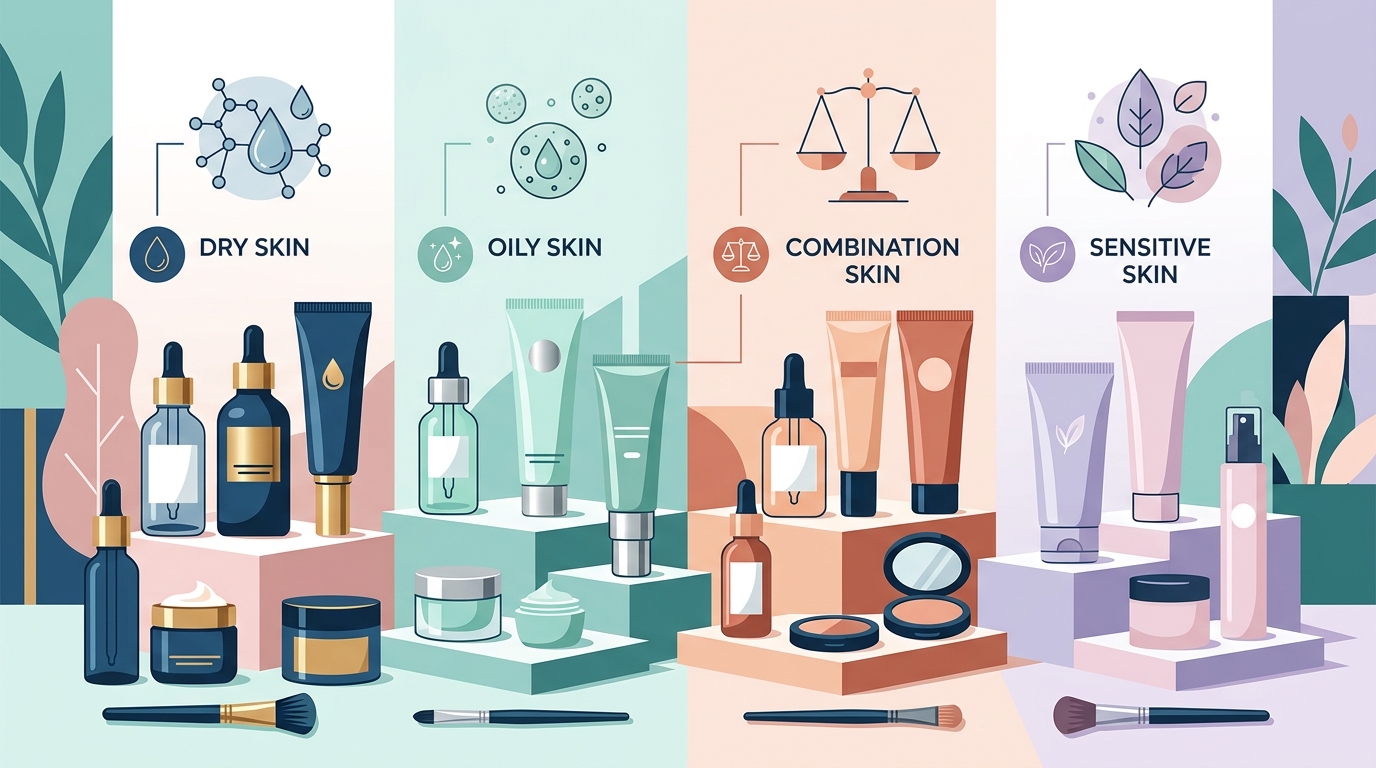
Cosmetics for Dry Skin
Dry skin lacks sufficient natural oils and moisture, often resulting in tightness, flakiness, and fine lines. This skin type requires hydration and nourishment to maintain a healthy barrier. Dry skin is a condition where the skin lacks adequate moisture and natural oils, leading to a rough texture and potential irritation.
Key Ingredients to Look For
Hydrating ingredients are non-negotiable for dry skin. Look for hyaluronic acid, glycerin, and ceramides in your skincare. These ingredients attract and lock in moisture. In makeup, cream-based products are superior to powders as they add a dewy, healthy glow. Check out our La Mer collection for luxurious, deeply hydrating treatments that restore the skin barrier.
Product Recommendations
Use creamy foundations and liquid highlighters. Avoid matte finishes, which can emphasize dry patches and fine lines. For body care, our body care products include rich lotions and butters that prevent moisture loss. Always apply a hydrating primer before makeup to create a smooth base.
Cosmetics for Combination Skin
Combination skin is the most complex type, featuring both oily and dry areas. Typically, the T-zone (forehead, nose, chin) is oily, while the cheeks are normal or dry. Balancing this skin type requires a strategic approach.
Key Ingredients to Look For
You need products that hydrate dry areas without overwhelming oily zones. Lightweight, water-based moisturizers are ideal. Look for niacinamide, which helps regulate oil in the T-zone while strengthening the skin barrier. Our Clinique collection offers balanced formulations perfect for combination skin types.
Product Recommendations
Use a mattifying primer only on the T-zone and a hydrating primer on the cheeks. Choose a medium-coverage foundation that is not too heavy. For skincare, consider our serums and treatments that offer targeted hydration. Exfoliating peels can help manage the oily areas while keeping the dry areas intact.
Cosmetics for Sensitive Skin
Sensitive skin reacts easily to external stimuli, including certain ingredients, fragrances, and environmental changes. It often presents as redness, itching, or burning. The primary goal is to minimize irritation and strengthen the skin barrier.
Key Ingredients to Look For
Look for "fragrance-free" and "hypoallergenic" labels. Ingredients like centella asiatica, aloe vera, and chamomile are soothing and anti-inflammatory. Avoid alcohol, essential oils, and harsh exfoliants. Our Inika Organic collection provides clean, gentle beauty options that are less likely to cause reactions.
Product Recommendations
Stick to minimal ingredient lists. For makeup, mineral-based foundations are often better tolerated than chemical-based ones. Consider our sensitive skin skincare range, which includes gentle cleansers and barrier-repair creams. Always patch test new products before full application.
Cosmetics for Normal Skin
Normal skin is well-balanced, with neither excessive oiliness nor dryness. It has small pores, good circulation, and a smooth texture. While this skin type is easier to manage, it still requires protection and maintenance to stay healthy.
Key Ingredients to Look For
You have the flexibility to use a wide range of products. Focus on antioxidants like Vitamin C and E to protect against environmental damage. Hyaluronic acid helps maintain hydration. Explore our Chanel collection for high-performance cosmetics that enhance natural beauty without disrupting the skin's balance.
Product Recommendations
Use a broad-spectrum sunscreen daily to prevent premature aging. Any lightweight moisturizer will work. For makeup, you can experiment with various finishes, from matte to dewy. Our cosmetics range includes versatile products suitable for normal skin.
Product Selection Comparison
The table below summarizes the key product types and ingredients for each skin type to help you make informed decisions.
| Skin Type | Primary Goal | Key Ingredients | Recommended Product Finish | Brand Recommendation |
|---|---|---|---|---|
| Oily | Oil Control | Salicylic Acid, Niacinamide | Matte / Powder | Beauty Affairs Makeup |
| Dry | Hydration | Hyaluronic Acid, Ceramides | Cream / Dewy | La Mer |
| Combination | Balance | Niacinamide, Glycerin | Satin / Natural | Clinique |
| Sensitive | Soothing | Centella Asiatica, Aloe | Mineral / Gentle | Inika Organic |
| Normal | Protection | Vitamin C, Antioxidants | Any | Chanel |
Key Takeaways
- Identify First: Perform the bare-faced test to accurately determine your skin type before buying products.
- Oily Skin: Use non-comedogenic, oil-free products with salicylic acid to control shine and prevent breakouts.
- Dry Skin: Prioritize hydrating ingredients like hyaluronic acid and ceramides in cream-based formulations.
- Combination Skin: Balance your routine by targeting the T-zone with mattifiers and cheeks with hydrators.
- Sensitive Skin: Avoid fragrances and harsh chemicals; opt for clean beauty brands like Inika Organic.
- Normal Skin: Focus on antioxidant protection and maintain balance with lightweight, nourishing products.
- Professional Help: Consider booking a skin consult at Beauty Affairs for personalized advice.
Frequently Asked Questions
How often should I change my skincare routine?
Your skincare routine should be adjusted seasonally or when your skin type changes due to age, hormones, or environment. Typically, a full product replacement cycle happens every 6 to 12 months.
Can I use the same makeup for all skin types?
No. Using oily skin products on dry skin can cause flaking, while using heavy creams on oily skin can cause breakouts. Always select products formulated for your specific skin type.
What is the best way to test if a product suits my skin?
Always perform a patch test. Apply a small amount of the product behind your ear or on your inner arm for 24 to 48 hours to check for adverse reactions before applying it to your face.
Do I need different products for day and night?
Yes. Day products should include SPF for protection, while night products can focus on repair and hydration with ingredients like retinol or peptides that may increase sun sensitivity.
How do I know if a product is non-comedogenic?
Look for the "non-comedogenic" label on the packaging. This indicates the product has been tested and formulated not to clog pores, making it suitable for oily and acne-prone skin.
Is it necessary to use a primer?
While not strictly necessary, primers help makeup last longer and can address specific skin concerns. For example, mattifying primers help oily skin, while hydrating primers benefit dry skin.
What role does diet play in skin health?
Diet significantly impacts skin health. High sugar and dairy intake can exacerbate acne in some individuals. Staying hydrated and eating antioxidant-rich foods supports skin vitality from the inside out.
Start Your Journey
Choosing the right cosmetics is an investment in your skin's health and your confidence. At Beauty Affairs, we offer a comprehensive range of products tailored to every skin type, from luxury brands like La Mer and Chanel to clean beauty options like Inika Organic. Whether you need a HIFU treatment or daily skincare, our experts are here to help. Visit Beauty Affairs today to explore our collections and find your perfect match.