
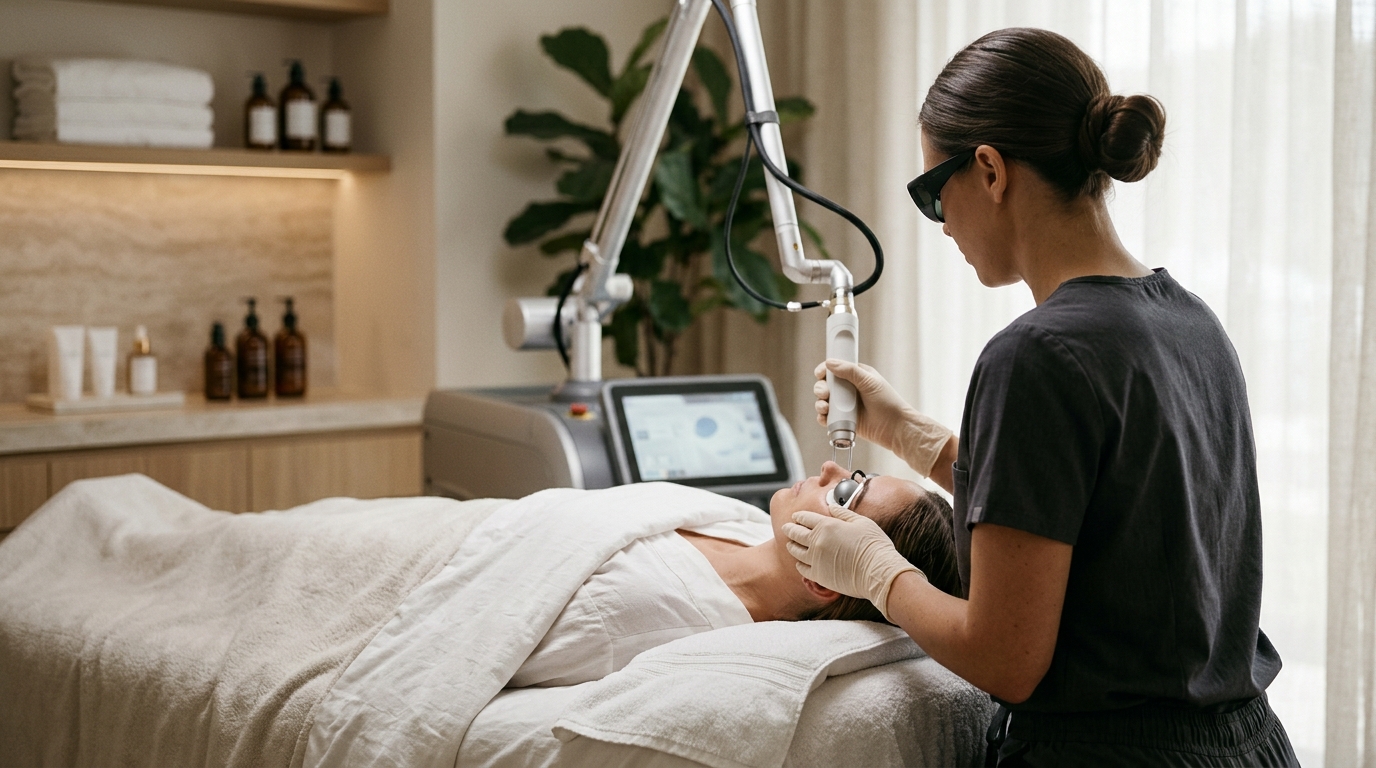
Laser resurfacing is a medical-grade procedure that uses controlled light energy to remove damaged outer skin layers, stimulating collagen production to smooth rough or uneven texture. At Beauty Affairs, we understand that deciding on a dermal esthetic treatment requires clear, factual information. This guide explains the mechanics of laser resurfacing, the recovery process, and how it compares to other texture-improving options available in our Sydney medispa network.
The Mechanics of Laser Resurfacing
Laser resurfacing is a dermatological procedure that utilizes specific wavelengths of light to ablate or heat the epidermis and dermis. The process works by creating controlled micro-injuries in the skin, which triggers the body's natural healing response. This response accelerates cell turnover and stimulates the production of new collagen and elastin fibers. The result is a smoother, more even skin surface with reduced visibility of fine lines and textural irregularities.
There are two primary types of laser resurfacing: ablative and non-ablative. Ablative lasers, such as CO2 and Erbium YAG, remove the outer layers of skin entirely. Non-ablative lasers, like Fraxel or PicoSure, heat the deeper layers without damaging the surface, resulting in less downtime but potentially requiring more sessions. The choice between these depends on the severity of the texture issue and the patient's tolerance for recovery time.
Is It Worth It for Uneven Texture?
For individuals with significant roughness, deep scarring, or pronounced unevenness, laser resurfacing is often the most effective single intervention. It addresses the root cause of texture by remodeling the dermal matrix, rather than just exfoliating the surface. However, it is not a one-size-fits-all solution. Mild textural issues may respond well to chemical peels or regular use of retinoids, which are less invasive and have no downtime.
The Recovery Process and Downtime
Recovery from laser resurfacing varies significantly based on the type of laser used. Ablative procedures typically require 7 to 14 days of downtime, during which the skin may appear red, swollen, and may crust or peel. Non-ablative treatments usually involve 3 to 5 days of redness and sensitivity, allowing patients to return to work sooner. During this period, strict sun protection and gentle skincare are essential to prevent hyperpigmentation and ensure optimal healing.
At Beauty Affairs, we provide comprehensive aftercare guidance to support your recovery. This includes recommendations for soothing moisturizers and broad-spectrum sunscreens that protect the newly treated skin. Proper aftercare is critical; neglecting sun protection or using harsh exfoliants during the healing phase can compromise results and lead to complications. Our medispa professionals in Sydney monitor your progress and adjust your aftercare routine as needed.
Laser Resurfacing vs. Other Texture Treatments
While laser resurfacing is powerful, it is not the only option for improving skin texture. Chemical peels, microneedling, and professional-grade exfoliants are less invasive alternatives. Chemical peels use acids to dissolve the outer layer of skin, promoting cell turnover. Microneedling creates tiny punctures to stimulate collagen, similar to lasers but with less thermal energy. Each method has its own benefits and limitations.
The choice between these treatments depends on your specific skin concerns, budget, and downtime tolerance. For deep textural issues, laser resurfacing is generally superior. For mild to moderate concerns, a combination of chemical peels and consistent home skincare may be sufficient. A consultation with a dermal esthetician can help you map out a personalized treatment plan that aligns with your goals and lifestyle.
Key Takeaways
- Laser resurfacing is a medical procedure that removes damaged skin layers to stimulate collagen and smooth texture.
- Ablative lasers offer more dramatic results but require longer downtime (7-14 days) compared to non-ablative lasers (3-5 days).
- The treatment is most effective for significant roughness, scarring, or unevenness that does not respond to topical skincare.
- Strict sun protection and gentle aftercare are critical during the recovery phase to prevent hyperpigmentation.
- Less invasive options like chemical peels and microneedling may be suitable for mild textural concerns.
- Consultation with a qualified dermal esthetician is essential to determine the best treatment for your skin type and goals.
Frequently Asked Questions
How long does laser resurfacing last?
Results from laser resurfacing are long-lasting because the procedure remodels the underlying collagen structure. However, skin continues to age, so maintenance treatments may be recommended every 1 to 3 years to sustain the improved texture and firmness.
Is laser resurfacing painful?
Most patients report a sensation of warmth or mild stinging during the procedure. Topical anesthetics are often used to minimize discomfort. Post-procedure, the skin may feel tender or sunburned, but this is manageable with prescribed pain relief and soothing care.
Can laser resurfacing be done on all skin types?
Modern laser technologies are safer for a wider range of skin types, including darker skin tones. However, the risk of hyperpigmentation is higher in melanin-rich skin. A thorough consultation is necessary to select the appropriate laser settings and wavelength for your specific skin type.
How many sessions are needed for uneven texture?
The number of sessions depends on the severity of the texture and the type of laser used. Ablative lasers may require only one session for significant improvement, while non-ablative lasers often require a series of 3 to 5 sessions spaced several weeks apart for optimal results.
What should I avoid before laser resurfacing?
You should avoid sun exposure, tanning beds, and harsh exfoliants for at least two weeks before the procedure. Retinoids and certain medications that increase photosensitivity should also be discontinued as directed by your provider to reduce the risk of complications.
Next Steps for Your Skin Texture Goals
If you are considering laser resurfacing to address rough or uneven skin texture, the first step is a professional consultation. At Beauty Affairs, our dermal estheticians in Sydney provide personalized assessments to determine if laser therapy is the right fit for your skin. We offer a range of medical-grade treatments and luxury skincare products to support your journey toward smoother, more even skin. To begin, contact our team to schedule a consultation and discuss your specific concerns.