
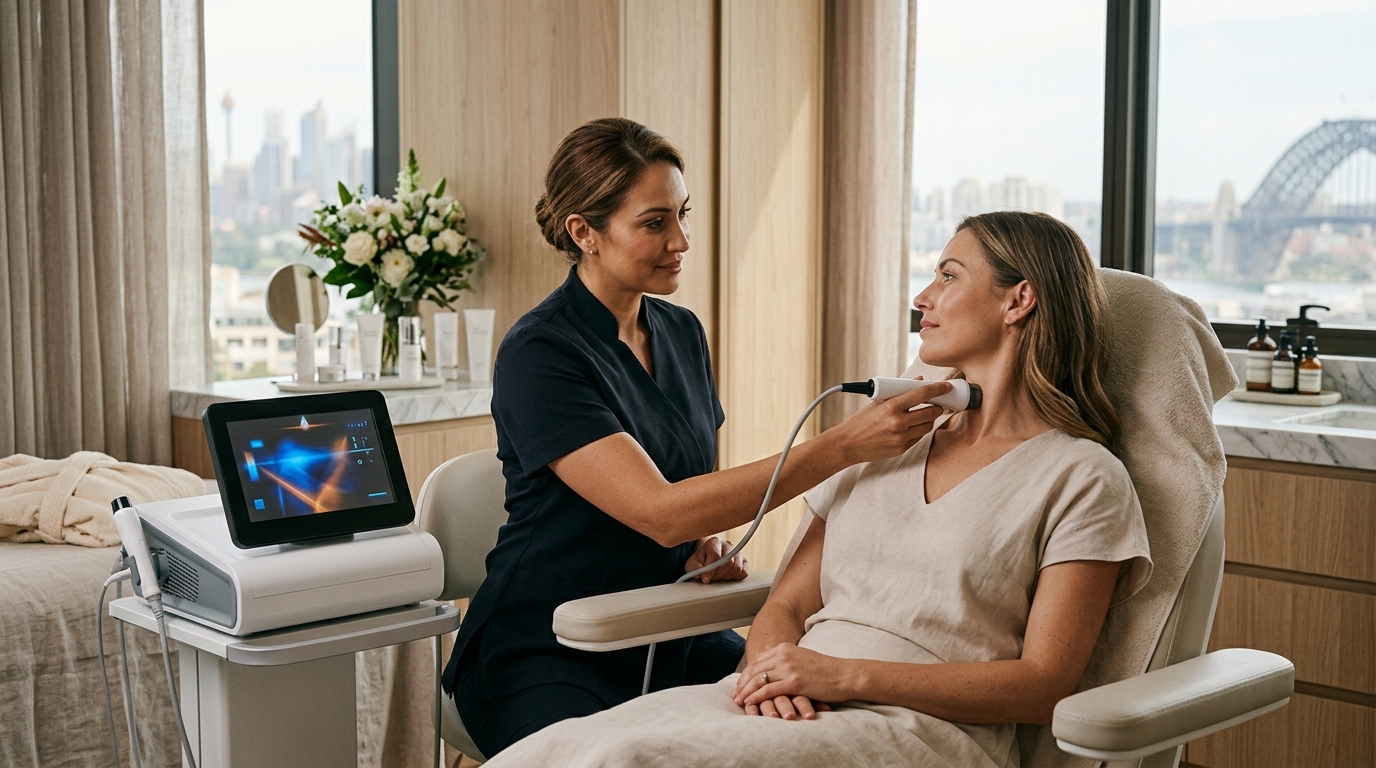
Radiofrequency skin tightening is a non-invasive aesthetic procedure that uses thermal energy to stimulate collagen production and firm the skin. It works by heating the dermis to trigger a wound-healing response, resulting in tighter, smoother skin over time. At Beauty Affairs, we provide expert guidance on whether this treatment aligns with your specific skin goals and biological response.
The Physics of Thermal Energy
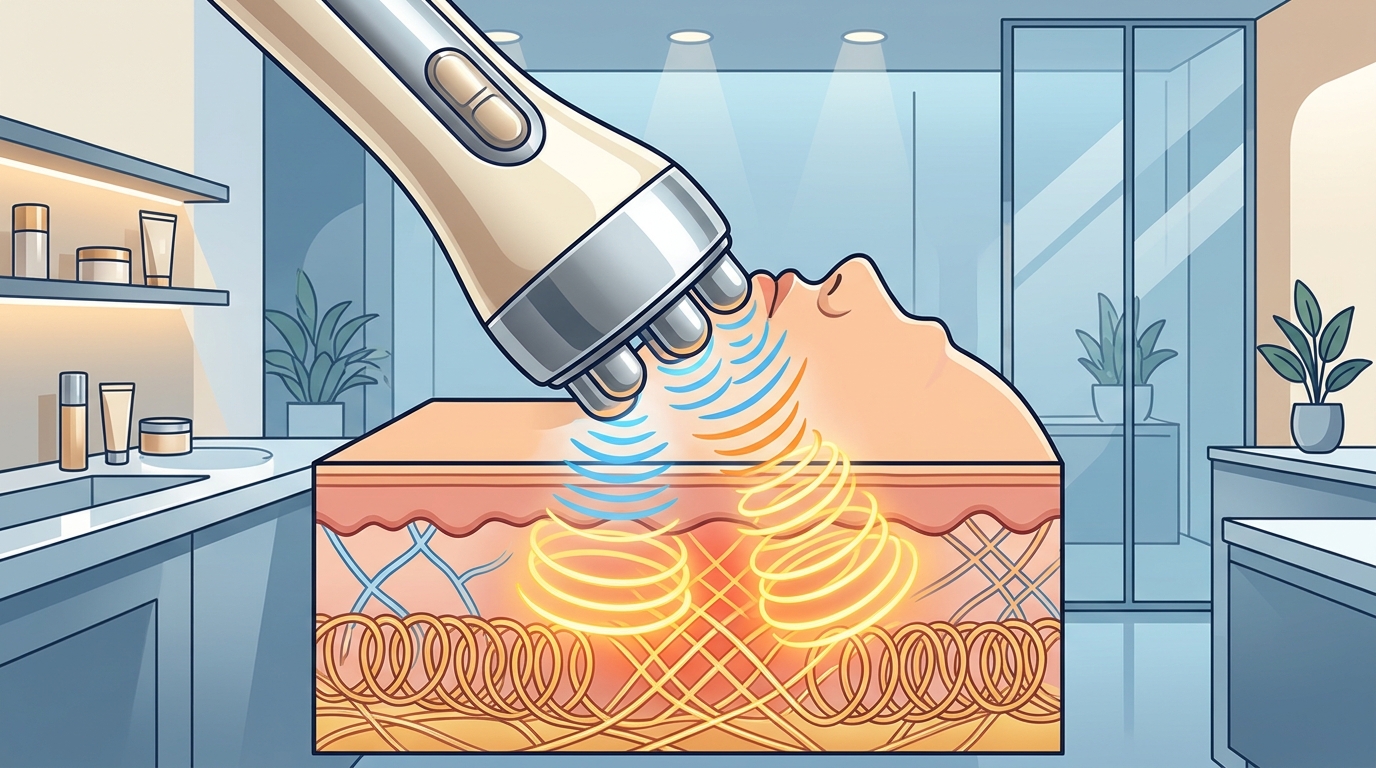
Radiofrequency (RF) energy is an alternating wavelength current delivered by specialized electrodes. As this energy travels across the tissue, it changes the polarity or electrical charge of the skin cells. This process generates heat deep within the dermis, the layer of skin responsible for structural integrity. The heat is the primary driver of the treatment's effectiveness.
According to research published in ASLMS, the delivery of this energy is precise and controlled. The goal is to reach a temperature that is high enough to stimulate collagen but low enough to avoid surface burns. This balance is critical for safety and efficacy. Modern devices use sensors to monitor tissue temperature in real-time.
The implication for the patient is a comfortable, non-surgical experience. You do not need to worry about needles or incisions. The sensation is often described as a warm, tingling feeling. This makes it a viable option for those who are hesitant about invasive procedures.
Biological Response and Collagen Remodeling
Radiofrequency skin tightening is a process that relies on the body's natural repair mechanisms. When the dermis is heated, existing collagen fibers contract immediately. This provides an initial, subtle tightening effect. However, the long-term results come from a slower biological process called neocollagenesis.
Neocollagenesis is the production of new collagen and elastin fibers. This process begins after the treatment and continues for several months. A study in PubMed noted that skin tightening procedures showed moderate improvement in 50% of cases and significant improvement in 31%. These results were sustained at follow-up visits without significant side effects.
The implication is that patience is required. You will not see the final result immediately. The skin continues to remodel and firm up over the following 3 to 6 months. This gradual improvement is a hallmark of non-surgical treatments. It contrasts with the immediate, dramatic change seen in surgical facelifts.
Facial Contouring and Fat Reduction
Radiofrequency technology is not limited to skin tightening. It can also influence subcutaneous fat. Research indicates that RF can decrease fat cell volume by promoting the breakdown of triglycerides into glycerol and free fatty acids. This process helps improve facial contours, particularly in areas with mild laxity and fat accumulation.
A study in PMC highlighted this dual action. The treatment targets both the skin surface and the underlying fat layer. This makes it a versatile tool for facial rejuvenation. It addresses sagging and volume loss simultaneously.
The implication is that RF is best suited for specific facial concerns. It is effective for mild to moderate laxity. It is less effective for severe sagging or significant weight loss. If your primary concern is a double chin or loose jowls, RF may be a good starting point. It can refine the profile without surgery.
Is Radiofrequency Right for You?
Determining if radiofrequency skin tightening is right for you depends on your skin type, age, and expectations. It is generally suitable for adults with mild to moderate skin laxity. It is less effective for very young skin with no signs of aging. It is also less effective for very mature skin with severe laxity, where surgical options may be more appropriate.
Your skin's response to heat is a key factor. Some individuals may experience more redness or sensitivity than others. A professional consultation is essential to assess your suitability. At Beauty Affairs, our dermal estheticians evaluate your skin health before recommending a treatment plan. We consider your medical history and current skincare routine.
The implication is that personalization is key. There is no one-size-fits-all approach. Your treatment plan should be tailored to your specific goals. Whether you want to address fine lines, improve texture, or lift the jawline, a professional assessment ensures you choose the right modality.
Integrating RF with Your Skincare Routine
Radiofrequency treatments work best when supported by a robust skincare routine. You should use products that support collagen production and skin barrier health. Ingredients like peptides, retinoids, and antioxidants are beneficial. They complement the thermal stimulation provided by the RF device.
For example, peptides are small chains of amino acids that signal skin cells to produce more collagen. Using a peptide serum after an RF treatment can enhance the remodeling process. Similarly, luxury skincare products with hydrating properties help maintain skin comfort during the healing phase.
The implication is that home care is just as important as the in-clinic treatment. Consistency in your daily routine amplifies the results of professional procedures. It ensures that your skin remains healthy and responsive. This holistic approach maximizes the longevity of your results.
Key Takeaways
- Radiofrequency skin tightening uses thermal energy to stimulate collagen production and firm the skin.
- The process involves immediate collagen contraction and long-term neocollagenesis over several months.
- RF can also reduce subcutaneous fat volume, improving facial contours in areas with mild laxity.
- It is most effective for adults with mild to moderate skin laxity, not severe sagging.
- Professional consultation is essential to assess suitability and set realistic expectations.
- Combining RF treatments with a collagen-supporting skincare routine enhances overall results.
- Results are gradual and sustained, with minimal downtime and side effects.
Frequently Asked Questions
How long does it take to see results from radiofrequency skin tightening?
You may notice an immediate, subtle tightening effect. However, the full results from new collagen production typically appear over 3 to 6 months. The skin continues to remodel during this period.
Is radiofrequency skin tightening painful?
The procedure is generally comfortable. Most people describe the sensation as a warm, tingling feeling. Topical anesthetics are rarely needed, but they can be used if you have a low pain tolerance.
Who is not a good candidate for radiofrequency skin tightening?
Individuals with severe skin laxity, active skin infections, or certain medical conditions may not be good candidates. A professional consultation is necessary to determine your suitability.
How many sessions are required for optimal results?
The number of sessions varies based on your specific goals and the device used. Typically, a series of treatments spaced several weeks apart is recommended for optimal results.
Can radiofrequency skin tightening be combined with other treatments?
Yes, it can often be combined with other non-surgical treatments like fillers or laser therapy. A professional can design a comprehensive treatment plan that addresses multiple concerns.
What is the downtime after radiofrequency skin tightening?
Downtime is minimal. You may experience some redness or swelling immediately after the treatment, but it usually subsides within a few hours. You can typically return to your normal activities right away.
Conclusion
Radiofrequency skin tightening is a scientifically backed, non-invasive solution for improving skin firmness and facial contours. It works by stimulating collagen production and reducing fat volume, offering a natural-looking lift without surgery. At Beauty Affairs, we are committed to helping you navigate your aesthetic journey with confidence. Our team of experts can assess your unique skin needs and recommend the best course of action. If you are considering this treatment, to schedule a consultation and take the first step toward your goals. according to Facial contour modulation