

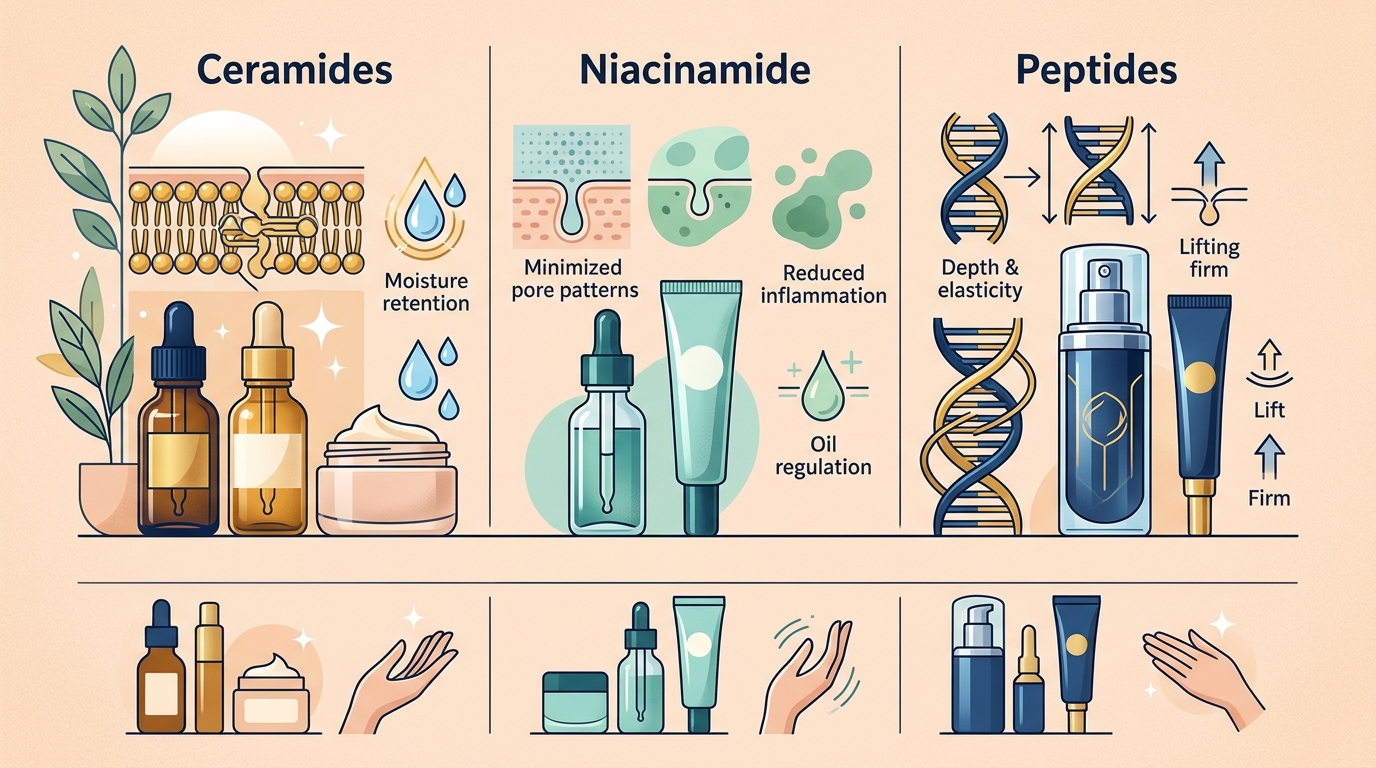
For mature skin, the choice between ceramides, niacinamide, and peptides depends on your primary barrier concern. Ceramides are best for immediate structural repair and hydration. Niacinamide excels at reducing inflammation and regulating oil. Peptides are ideal for stimulating collagen and firming. Beauty Affairs offers a curated selection of luxury products featuring these key actives to help you build a targeted routine. according to The role of
Understanding the Core Differences
While all three ingredients support skin health, they operate through distinct mechanisms. Understanding these differences is crucial for selecting the right product for your specific skin goals.
Ceramides: The Structural Foundation
Ceramides are lipid molecules that make up a significant portion of the skin's outer barrier. They function like mortar between the bricks of skin cells, preventing water loss and protecting against external irritants. As we age, natural ceramide production decreases, leading to dryness and a compromised barrier. Topical application helps replenish these lipids, restoring the skin's structural integrity and hydration levels.
Niacinamide: The Multi-Tasker
Niacinamide is a form of Vitamin B3 that offers a wide range of benefits for the skin. It is particularly effective at strengthening the skin barrier by increasing the production of ceramides and other lipids. Additionally, it helps regulate sebum production, reduces inflammation, and minimizes the appearance of pores. For mature skin, niacinamide is valuable for its ability to improve skin texture and reduce redness without causing irritation.
Peptides: The Signal Boosters
Peptides are short chains of amino acids that act as messengers in the skin. They signal skin cells to perform specific functions, such as producing more collagen and elastin. While they do not directly replace lipids like ceramides, they support the skin's structural proteins. This makes them highly effective for improving firmness, reducing the appearance of fine lines, and supporting overall skin resilience.
Comparison Table: Barrier Repair Actives
| Feature | Ceramides | Niacinamide | Peptides |
|---|---|---|---|
| Primary Function | Structural repair and hydration | Barrier strengthening and oil control | Collagen stimulation and firming |
| Best For | Dry, dehydrated, or sensitive skin | Combination, oily, or uneven skin tone | Sagging, fine lines, and loss of elasticity |
| Texture | Often found in creams and balms | Lightweight serums and toners | Serums and firming creams |
| Irritation Potential | Very low | Low to moderate | Very low |
Ceramides: Strengths and Limitations
Ceramides are the gold standard for repairing a compromised moisture barrier. Their primary strength is their ability to lock in hydration and protect the skin from environmental stressors. They are exceptionally gentle, making them suitable for even the most sensitive skin types. However, their limitation is that they primarily address hydration and barrier integrity. They do not directly stimulate collagen production or significantly alter skin tone. If your main concern is dryness or a stinging sensation when applying other products, ceramides are the essential first step.
Niacinamide: Strengths and Limitations
Niacinamide is a versatile ingredient that addresses multiple skin concerns simultaneously. Its strengths include reducing inflammation, minimizing the appearance of pores, and improving skin texture. It is particularly beneficial for mature skin that may still experience occasional breakouts or uneven tone. The limitation of niacinamide is that it can be less effective than dedicated ceramide products for severe dehydration. Additionally, while it is generally well-tolerated, some individuals may experience temporary flushing or irritation at higher concentrations. It is best suited for those looking to balance oil production and improve overall skin clarity.
Peptides: Strengths and Limitations
Peptides are powerful for addressing the signs of aging, such as sagging and fine lines. Their strength lies in their ability to signal the skin to produce more collagen and elastin, leading to firmer, more resilient skin over time. They are also very gentle and can be used in combination with other actives. The limitation is that results from peptides are often slower and more subtle compared to immediate hydration from ceramides. They are best for readers whose primary goal is to improve skin firmness and elasticity, rather than just hydration.
Choosing the Right Active for Your Skin
Selecting the right ingredient depends on your specific skin goals and current condition.
Choose Ceramides If...
Your skin feels tight, dry, or flaky. You experience stinging or burning when applying other skincare products. You have a compromised moisture barrier due to over-exfoliation or environmental factors. You want a gentle, non-irritating option to restore hydration and protection.
Choose Niacinamide If...
You have combination or oily skin that is also dehydrated. You want to minimize the appearance of enlarged pores. You are dealing with uneven skin tone or redness. You want to regulate sebum production while still supporting barrier health.
Choose Peptides If...
Your primary concern is loss of firmness or elasticity. You want to reduce the appearance of fine lines and wrinkles. You are looking for a long-term solution to improve skin structure. You want a gentle alternative to stronger anti-aging actives like retinol.
Frequently Asked Questions
Can I use ceramides, niacinamide, and peptides together?
Yes, these three ingredients are highly compatible and can be used together in a skincare routine. In fact, combining them can provide comprehensive barrier repair, hydration, and anti-aging benefits. Look for products that contain multiple of these actives for a streamlined routine.
Which is better for sensitive mature skin?
Ceramides are generally the best starting point for sensitive mature skin due to their gentle nature and direct barrier-repairing properties. Niacinamide is also well-tolerated by most, but it is advisable to start with a lower concentration. Peptides are also very gentle and can be introduced once the barrier is stabilized.
Do peptides replace the need for ceramides?
No, peptides and ceramides serve different functions. Peptides signal the skin to produce structural proteins, while ceramides replenish the lipid barrier. For optimal results, especially in mature skin, using both is recommended. Peptides support the structure, while ceramides ensure the barrier is intact and hydrated.
How long does it take to see results from barrier repair?
Hydration improvements from ceramides can be seen almost immediately. Niacinamide may take a few weeks to show improvements in texture and tone. Peptides typically require consistent use over several months to see noticeable changes in firmness and elasticity. Patience and consistency are key for all three ingredients.
Where can I find high-quality products with these ingredients?
You can find a wide range of luxury skincare products featuring ceramides, niacinamide, and peptides at Beauty Affairs. Our curated selection includes products from leading brands that prioritize skin health and efficacy.